Report · The Agentic SDLC
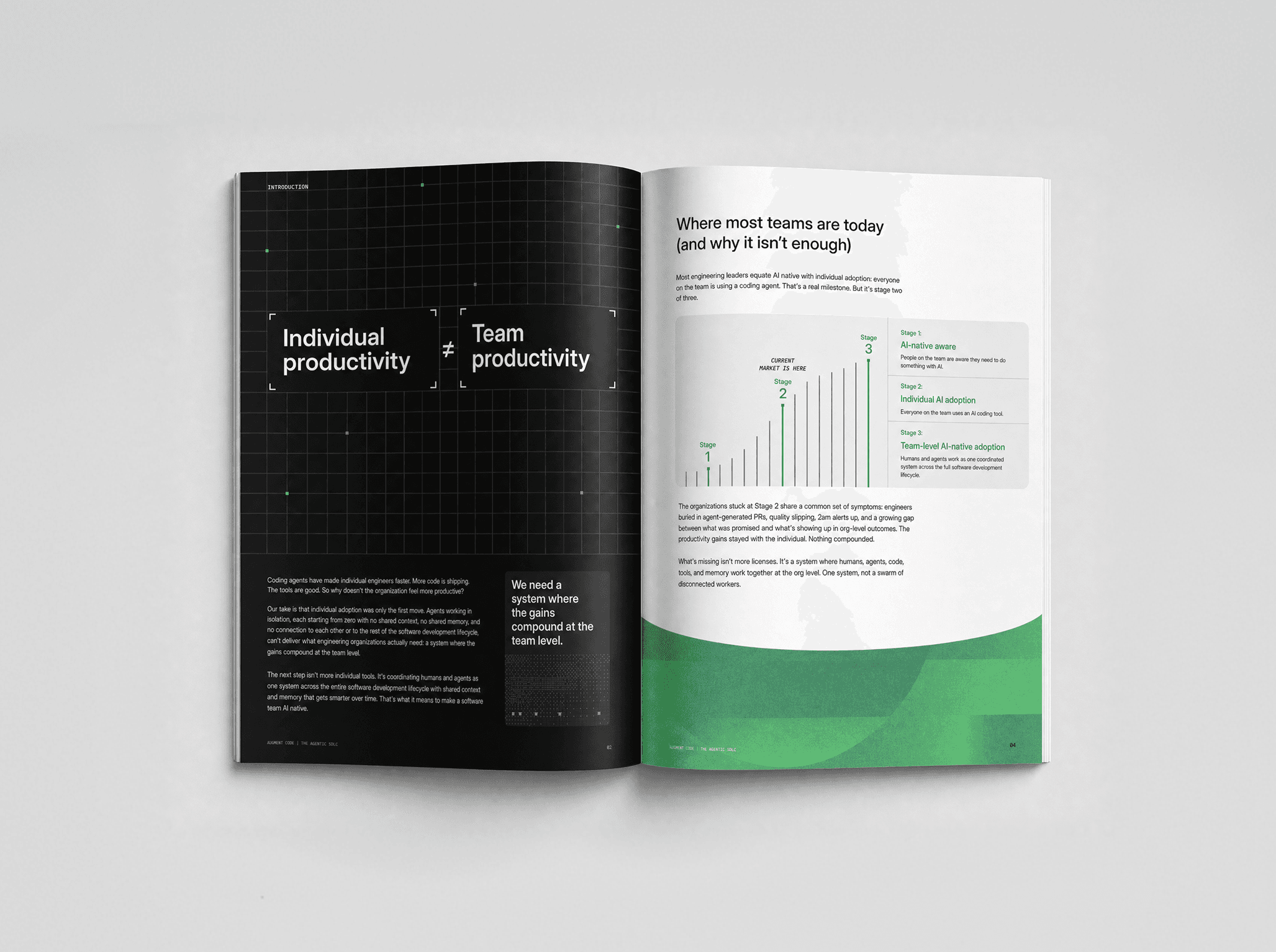
Individual productivity isn’t team productivity.
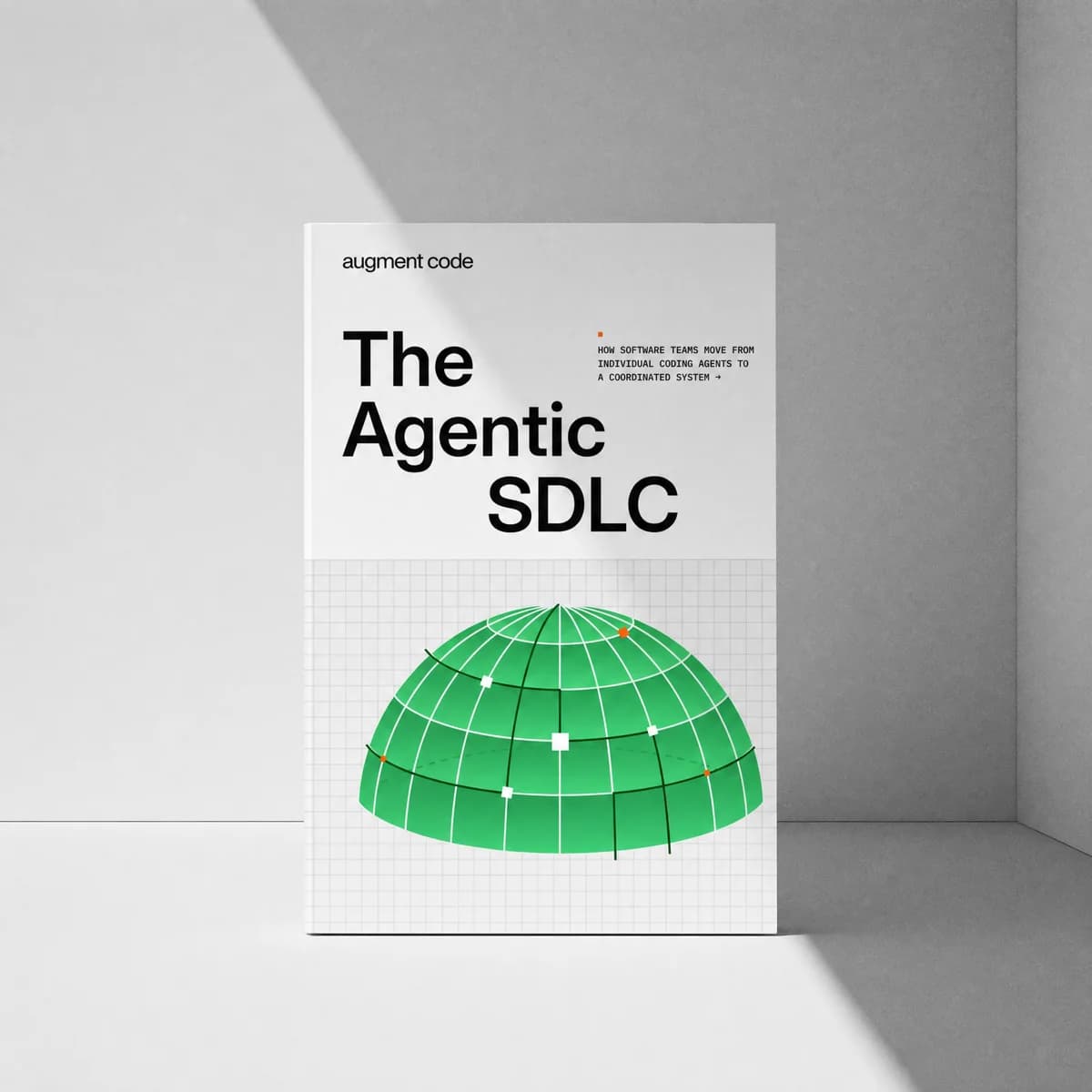
How software teams move from individual coding agents to a coordinated, team-level system.
Key findings
- 01
Even with 48% of code now AI-generated, most teams are stuck at Stage 2, individual adoption, where gains never compound.
- 02
Team-level AI-native means humans steer and agents execute across all six SDLC stages, planning to operations.
- 03
Systems that compound share three traits: model-agnostic, shared memory, and governance built in from day one.
Summary
Coding agents made individual engineers faster, and more code is shipping. But the gains stayed siloed: agents work in isolation, with no shared context, memory, or connection to the rest of the lifecycle.
So org-level outcomes barely move. Engineers drown in agent-generated PRs, quality slips, and the gap between what was promised and what reaches production keeps widening. Nothing compounds.
The next step isn’t more tools. It’s coordinating humans and agents as one system across the SDLC, with shared context and memory that gets smarter over time. It’s what teams like Stripe, Ramp, and Uber are building now.
What you’ll learn
How humans and agents split the work across the six SDLC stages, the four-layer stack behind a coordinated system, and the three traits that make it compound.
Download the e-book
- Free
- Download instantly
- No spam
- 10-page guide
Prefer to see it live? See how Cosmos works →