Guide · Building a Software Factory
Build the factory. Compound the gains.
The engineering leader’s guide to building a software factory: how teams move from individual coding agents to team-level software delivery.
Key findings
- 01
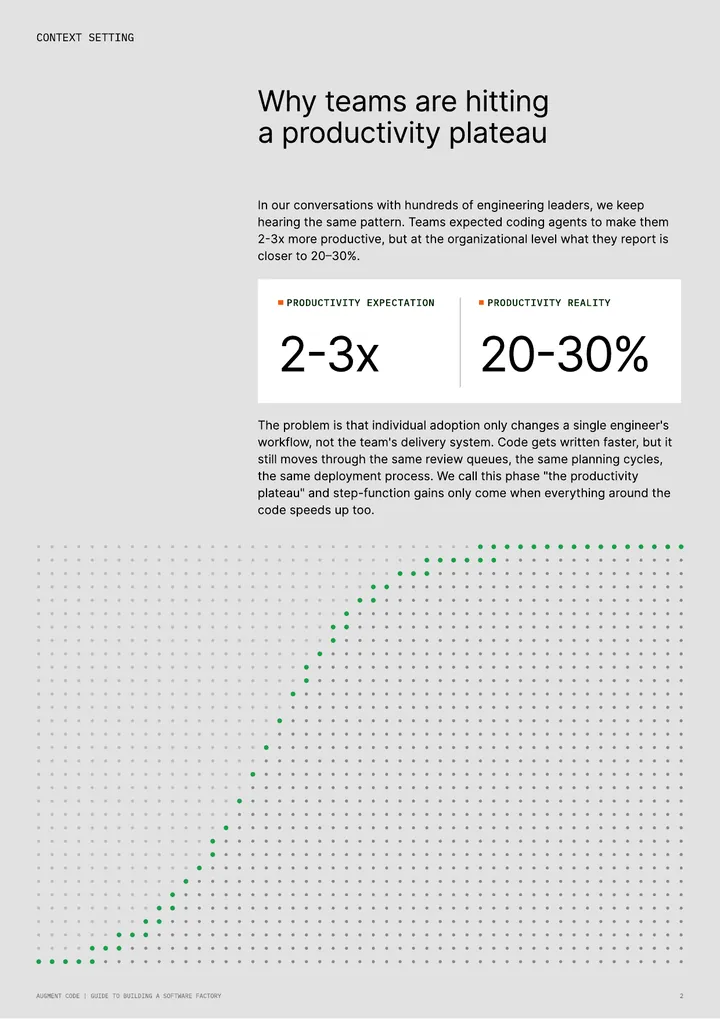
Engineering leaders expected coding agents to make teams 2-3x more productive. What they report at the organizational level is closer to 20-30%, because individual adoption speeds up code, not the review queues, planning cycles, and deployment process around it.
- 02
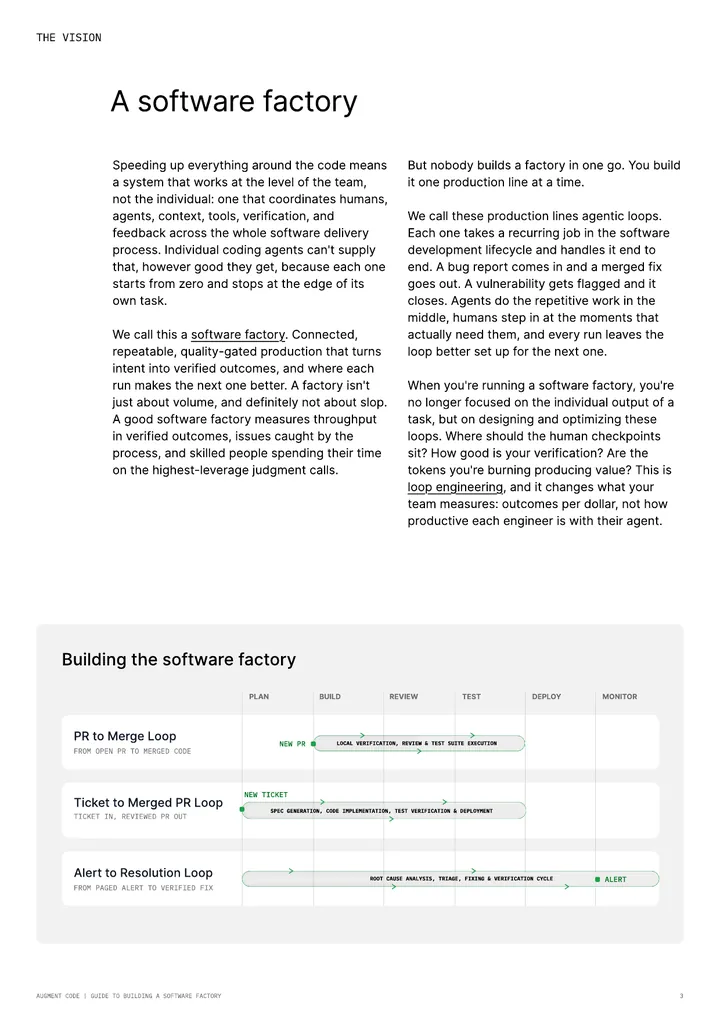
A software factory is built one agentic loop at a time: repeatable production lines, each with several specialized agents, that take a recurring job (a PR, a ticket, an alert) from trigger to verified outcome.
- 03
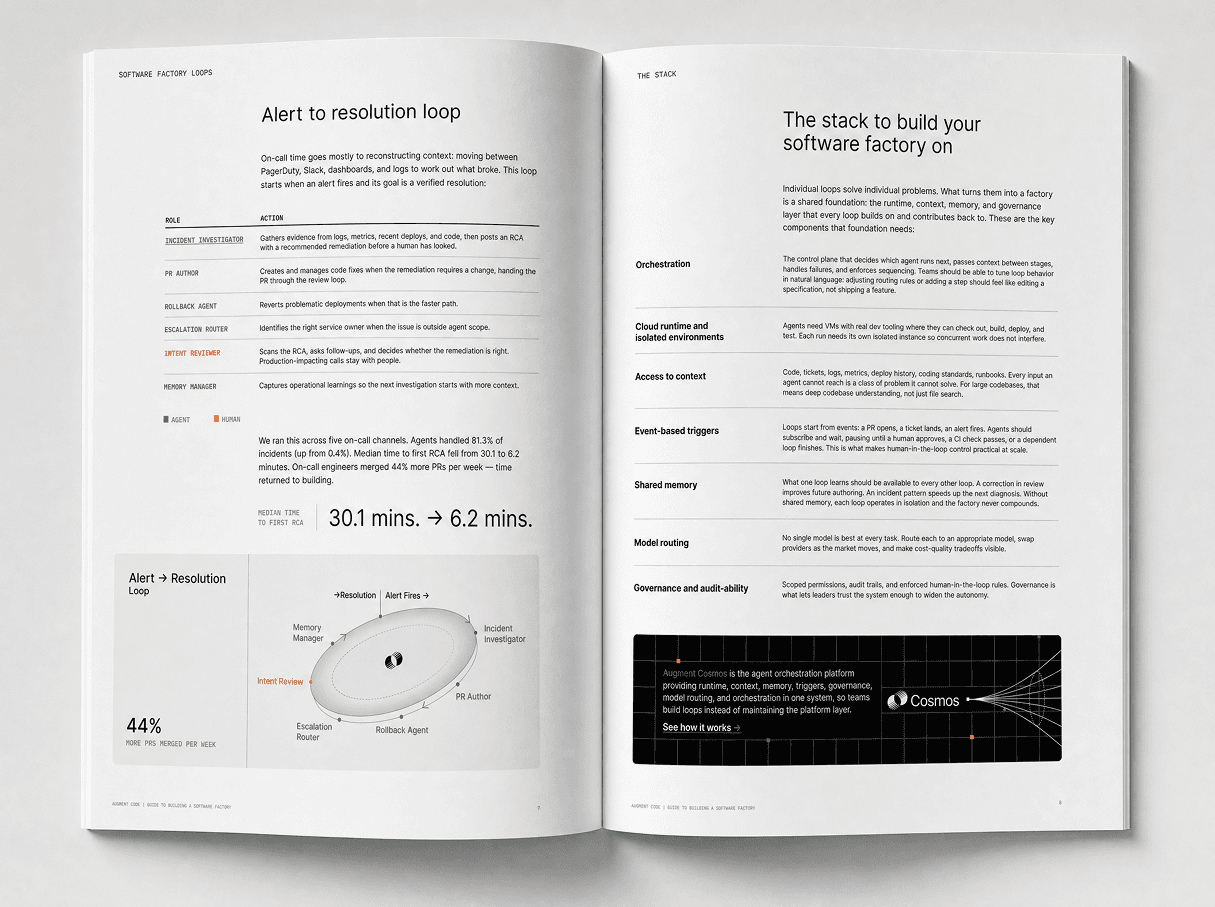
Teams running the alert-to-resolution loop across five on-call channels saw agents handle 81.3% of incidents (up from 0.4%) and cut median time to first RCA from 30.1 to 6.2 minutes.
Summary
Individual adoption only changes a single engineer’s workflow, not the team’s delivery system. Code gets written faster, but it still moves through the same review queues, the same planning cycles, the same deployment process. Step-function gains only come when everything around the code speeds up too.
A software factory is connected, repeatable, quality-gated production that turns intent into verified outcomes, built one production line (one agentic loop) at a time. Each loop takes a recurring job in the software development lifecycle and handles it end to end: agents do the repetitive work in the middle, humans step in at the moments that actually need them, and every run leaves the loop better set up for the next one.
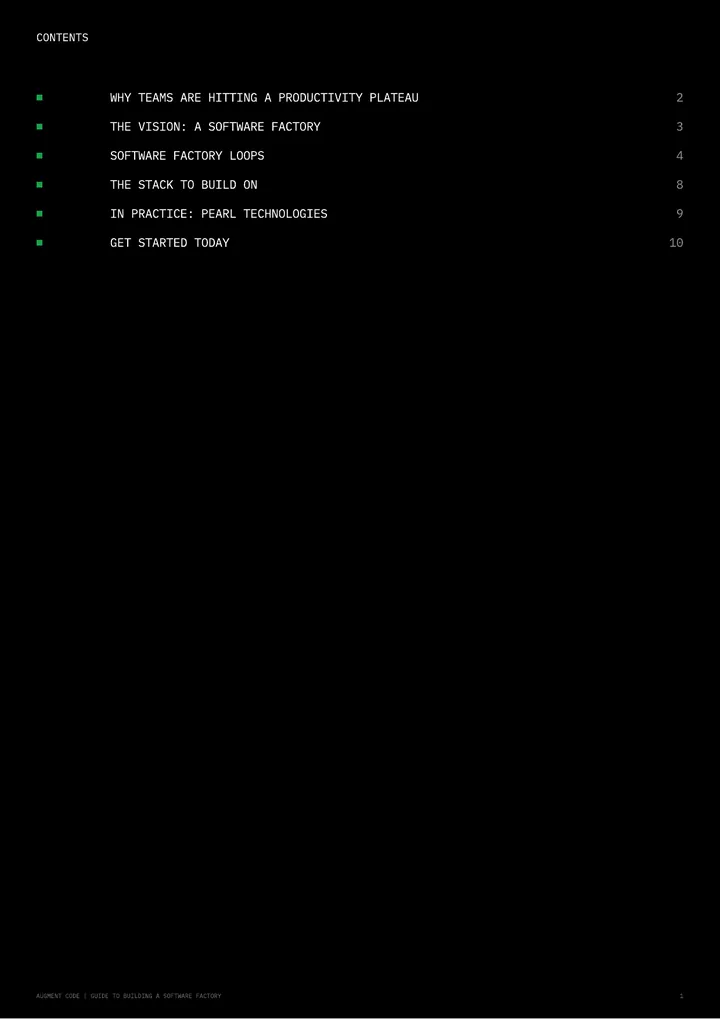
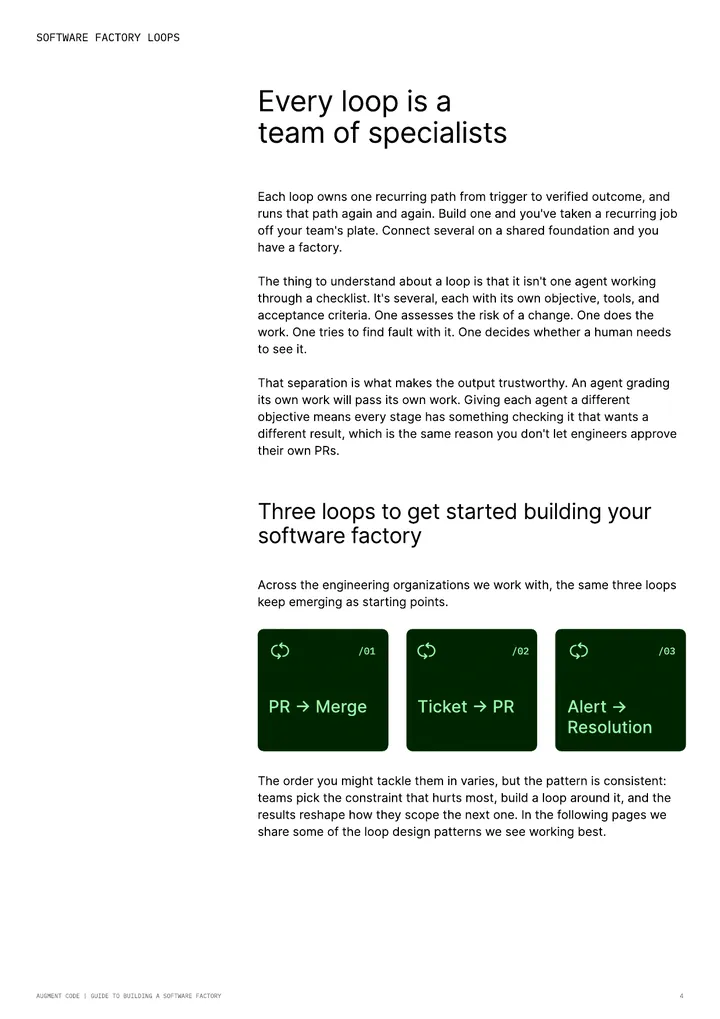
Across the engineering organizations we work with, three loops keep emerging as starting points: PR to merge, ticket to PR, and alert to resolution. This guide walks through the roles, triggers, and results inside each one, plus the shared foundation (orchestration, context, memory, governance) that turns individual loops into a factory.
What you’ll learn
The design pattern behind three starting loops (PR to merge, ticket to PR, alert to resolution), the seven components of the shared foundation every loop builds on, and how Pearl Technologies went from zero PRs in a four-day baseline to 728 PRs in 13 working days.