Report · From Agents to Loops
It’s not a tool swap. It’s a systems redesign.
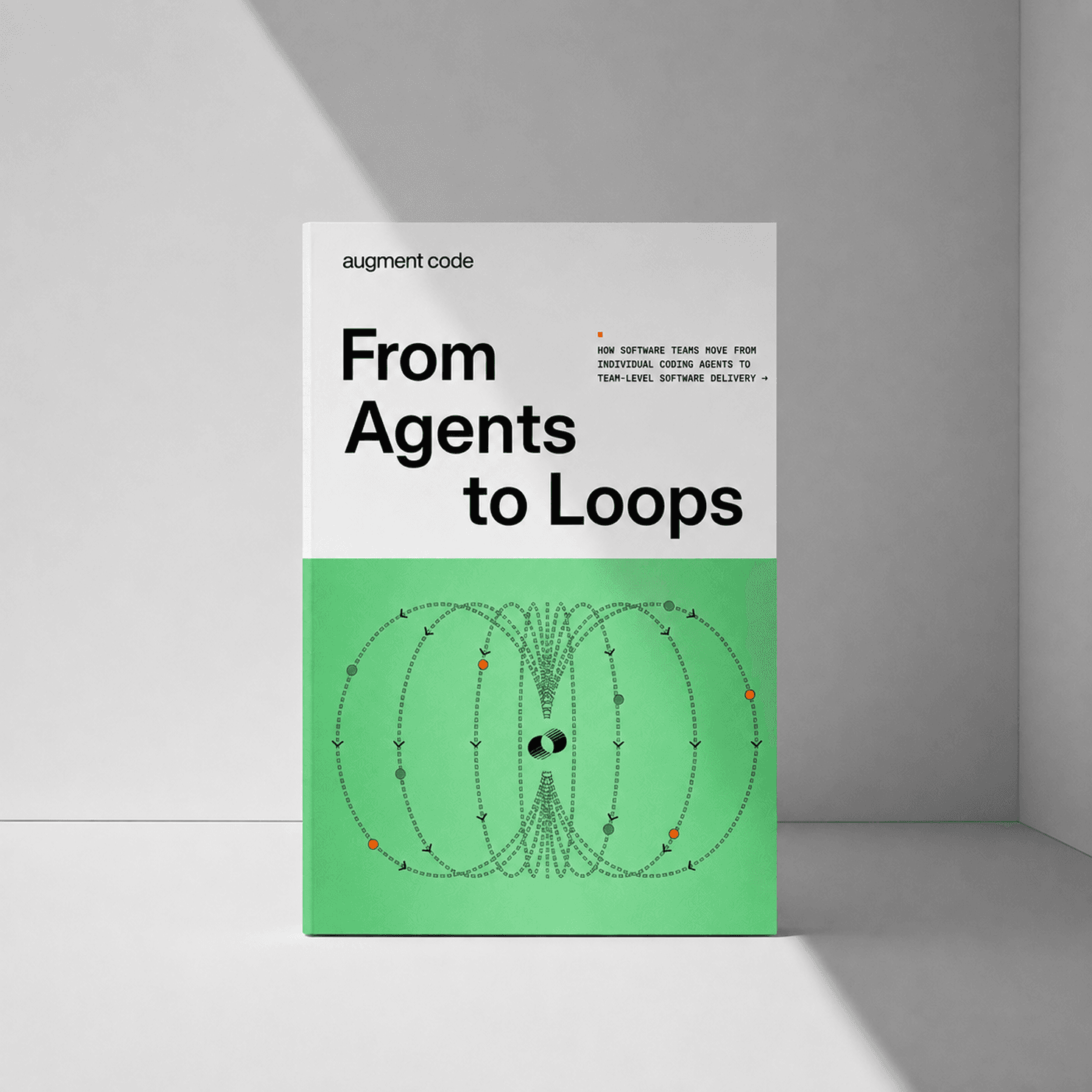
How software teams move from individual coding agents to team-level software delivery.
Key findings
- 01
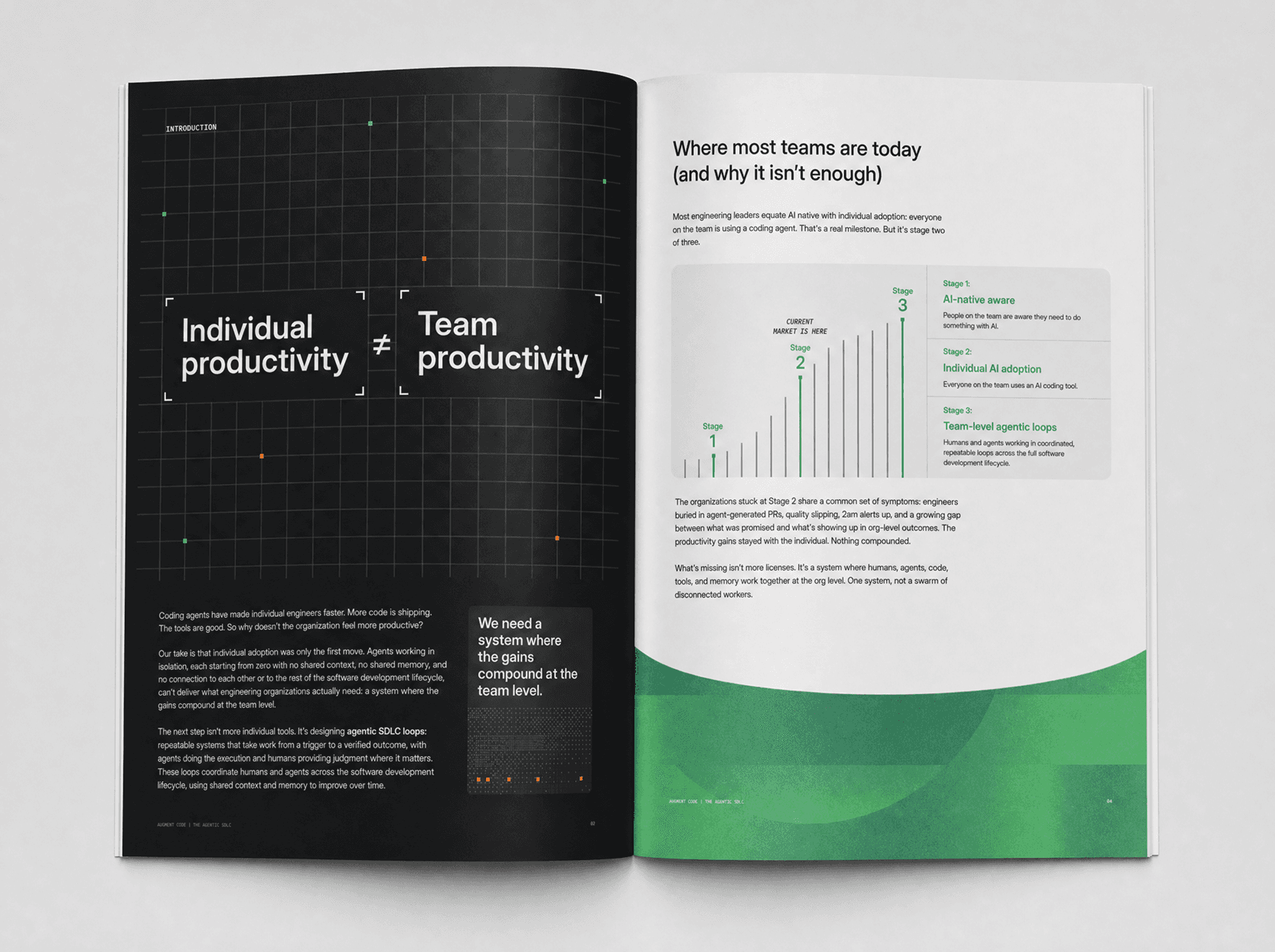
Most engineering leaders equate AI-native with individual adoption, stage two of three. Teams stuck there share the same symptoms: PRs piling up, quality slipping, and gains that never compound past the individual.
- 02
An agentic SDLC loop starts with a trigger, gives agents the repetitive execution work, brings humans in where judgment matters, and ends in a verified outcome. Our philosophy: humans steer, agents execute.
- 03
The loops that compound share three traits: model-agnostic by design, shared memory that accumulates across the team, and governance built in from day one, not retrofitted later.
Summary
Coding agents have made individual engineers faster. More code is shipping. So why doesn’t the organization feel more productive? Agents working in isolation, each starting from zero with no shared context or memory, can’t deliver what engineering organizations actually need: a system where the gains compound at the team level.
The teams modernizing fastest, organizations like Stripe, Ramp, and Uber, are building that system themselves: defining how humans and agents divide the work, building shared memory across the team, and connecting agents to every stage of the software development lifecycle. Augment Cosmos is what those teams would have built, productized.
The organizations that get there first won’t just generate more code. They’ll build agentic loops that reliably deliver merged fixes, resolved incidents, and remediated vulnerabilities, with every run, correction, and successful pattern adding to the system instead of disappearing at the end of a session.
What you’ll learn
How humans and agents split the work across the six stages of the SDLC, the stack that runs agentic loops end to end, and the three traits that separate loops that compound from ones that don’t.